*21F
proposed
AB21F · U+10610
Our readings
- ha
- Value
- ḥi
- Also
Across the scripts
Linear A
AB21F
Linear B
B 21 · qi
As the scribes wrote it
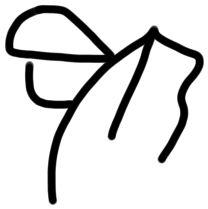
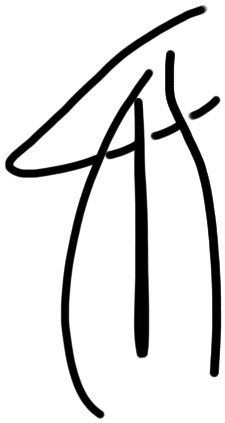
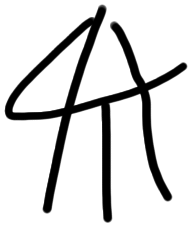
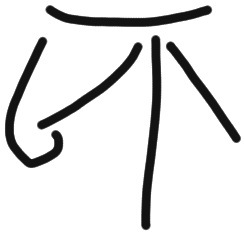
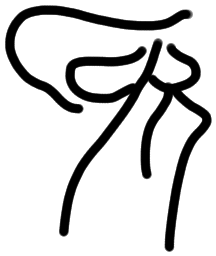
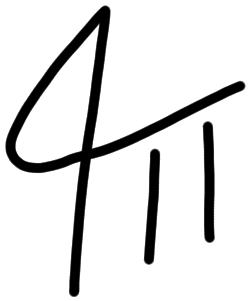
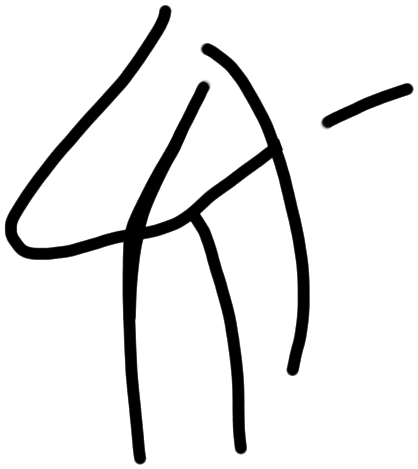

8 of SigLA’s 35 tracings read with certainty, the most-traced site first, shown light on dark. Tracings: SigLA, Salgarella and Castellan, CC BY-NC-SA 4.0
Where it is written
- Haghia Triada16
- Zakros6
- Phaistos3
- Khania2
- Arkhanes1
32 times in 28 documents
Read in
- *21F(logogram) ‘ewe (livestock logogram, standing alone before a numeral)’Probable
- TU-*21F-RI-NAṭuhārīna ‘the pure ones (adjective, masculine plural -īna), a grain and oil recipient’Probable
- *21F-*118ḥiṭṭa ‘wheat’Candidate
- *21F-TU-NEḫatun ‘bridegroom, son-in-law’Candidate
10 entries written with it
Why these values
- ha
As a class (h ḥ ḫ), 7/11 word types, and no rival class above 8/11, so root shape does not decide. In context H gives *21F-*118 ḥiṭṭa ‘wheat’ (KH 88, ZA 5a), *21F-TU-NE hatune ‘son-in-law’ (HT 7b, HT 87, HT 117b) and TU-*21F-RI-NA ṭuhārīna. HT Scribe 11 writes *21F-TU-NE (HT 7b, a roster of men) and QE-TU-NE (HT 12, among goods), keeping *21F apart from Q.
- ḥi
Second value of the same sign, not a rival: *21F-*118 ḥiṭṭa ‘wheat’ (KH 88, ZA 5a)
Commentary
An optional H-sign covering h, ḥ and ḫ, as cuneiform’s Ḫ-series writes West Semitic ḥ and ḫ alike. Its vowel follows the word: ḥi in *21F-*118 ḥiṭṭa, as Egyptian group writing spells that word with an a-sign (Hoch 1994, 85, no. 104), and none in NA-*21F-NE-MI-NA naḫnemina. H is ordinarily unwritten, as in Linear B, where a₂ (ha) is optional: pa-we-a 33 times, pa-we-a₂ 5. Linear B keeps *21 as the syllable qi and as the sheep ideograms. Salgarella suggests that the qi of Minoan-looking men’s names, drawn with three strokes in a-qi-ru (KN Ce 50.1a) and qi-ta-ro (KN Dk(1) 936), and with two in a-qi-ro (KN Da 1123), the same name adapted to Greek, may be a remnant of the female sign’s syllabic use in Linear A (Salgarella 2020, 214, 244, 265–66, 279). Standing alone with a numeral, *21F is the logogram OVISf (ewe): HT 132, ZA 9, ZA 26a. No word is yet attested both with and without *21F. Scribes appear to have begun writing it inside words in Late Minoan I. Every dated document that does so belongs to that period, at Haghia Triada, Khania, Zakros and Arkhanes. PH 2, from Phaistos, is of unknown context and carries no date. Rival: qi, the Linear B value, as Davis transcribes the sign inside words: qi-*118 (KH 88, ZA 5, ZA 14), here *21F-*118, and qi-ja-du[ (HT 84), which he sets beside the Linear B man’s name qi-ja-to (KN Db 1140.B) and Βίαθθος, a man at Polyrrhenia, an example he calls rather weak (Davis 2026b, 77 n. 282, 117 and n. 445, 155, the Greek after Hitchman 2006, 83).
As a logogram
OVISf ‘ewe’ speculative
Female sheep logogram, the pair of *21M: standing alone before a numeral. Inside a word the sign of this number is the syllabogram ḤA, recorded under signs.