JU
proposed
AB65 · U+10636
Our readings
- lu
- Value
- ju
- Also
Across the scripts
Linear A
AB65
Linear B
B 65 · ju
As the scribes wrote it
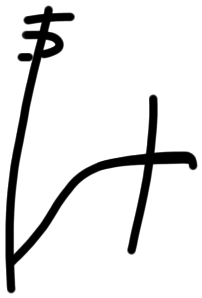
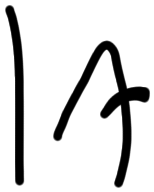
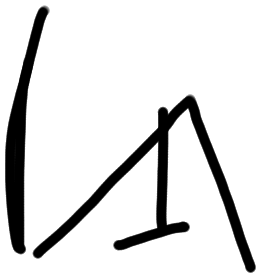
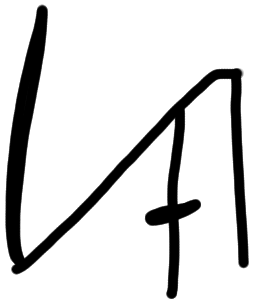
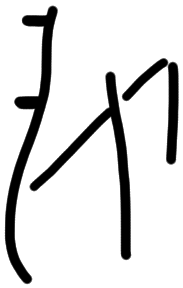
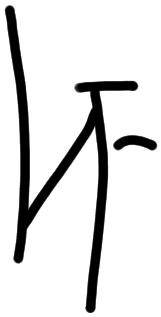

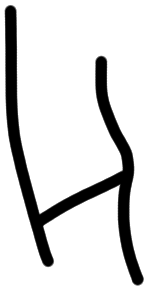
8 of SigLA’s 35 tracings read with certainty, the most-traced site first, shown light on dark. Tracings: SigLA, Salgarella and Castellan, CC BY-NC-SA 4.0
Where it is written
- Haghia Triada16
- Zakros7
- Knossos4
- Arkhanes1
- Papourou1
- Phaistos1
- Tylissos1
36 times in 31 documents
Why these values
- lu
l and d 17/20, r 15/20; the /ra/ elimination assumes no repeated sign, against SA-RA-RA (HT30). l reads all 4 context words; yu possible in JU-KU-NA (KNZc6) and the endings
- ju
Second value of the same sign, not a rival: JU is a palatal liquid, /ʎu/ ~ /lʸu/. KNZc6 JU-KU-NA = yukūna ‘shall be established’ (√k-w-n, DULAT 442); A-RA-JU = ᵘʳᵘA-ra-yu (RGTC 12/2, 30); Linear B *65 = ju (Melena 2014, 16), the one undeciphered Linear B sign whose value Salgarella finds more securely determined, from ri-*65-no beside ri-u-no and ri-jo-no, and i-*65 beside dative i-je-we, υἱός (Melena 2014a, 75–79, 81–83, apud Salgarella 2023, 413). l stays primary.
Commentary
Second /l/-sign alongside RA₂ (AB76). Possibly vowel-distinguished: RA₂ = /la/, JU = /lu/. Both fill the L/R distinction gap needed by Semitic substrate.
Position rule: (a) standalone JU + numeral/fraction in a list (ARKH4a, HT68, HT97a, HT108, ZA11a) = commodity ABBREVIATION, gloss ‘flour (commodity)’ CANDIDATE—a GORILA positional gloss, not acrophonic (no Semitic flour word is /l/-initial); Schoep counts AB 65 FAR among the Linear A logograms with a possible Linear B homomorph (Schoep 2002, 131–35, apud Salgarella 2020, 220 n. 119); mark ‘[commodity?]’ where ambiguous. (b) standalone JU without quantity, separator-delimited votive context (KNZb4 ‘JU 𐄁 JA-SI 𐄁 SI’) = syllabic /lu/—dedicatory preposition l(u) ‘to/for’ or asseverative lū, CANDIDATE. (c) word-internal JU = /lu/ or /yu/ (below). *ḳamḥ- ‘flour’ for KE-JU-MI stays rejected (unaccounted l).
JU writes a palatal liquid, /ʎu/ ~ /lʸu/: lu in Semitic roots (DA-JU-TE, SU-JU-TA), yu where the word needs the glide (KNZc6 JU-KU-NA yukūna, √k-w-n, DULAT 442; the endings -iyyu, -y, KU-RE-JU beside KU-RE; A-RA-JU ʾArāyu = ᵘʳᵘA-ra-yu, RGTC 12/2, 30). It is the u-member of RA₂‘s series: Linear B *76 ra₂ = /rya, lya/ and ro₂ = /ryo, lyo/, ’liquid yodized resonants‘, *76 ’already attested in Linear A‘ (Melena 2014, 63); Linear A had ’a series of post-palatalized and post-labialized consonants' (Palaima 2020, 8). Linear B took JU over as *65, which writes both ju and zu (Melena 2014, 16), and renders Linear A JU words with a glide: ku-ma-ju > ka-ma-jo, qa-ti-ju > qa-ti-ja (Davis 2026b, 104, 162–163).