O
conventional
AB61 · U+10635
Our readings
- o
- Value
Across the scripts
Linear A
AB61
Linear B
B 61 · o
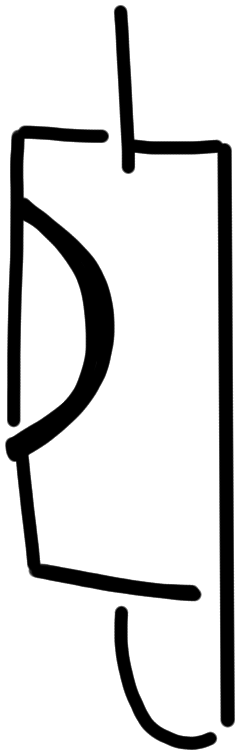
Cretan Hieroglyphic: CH 009, mitten
Soldani 2013 (CH 009 → AB 61, A 123, A 188), in Ferrara, Montecchi & Valério 2022, Appendix 1; Ferrara, Montecchi & Valério 2022 derive LA 61 from CH 013 and LA 01 from CH 009 (§1.1)
As the scribes wrote it
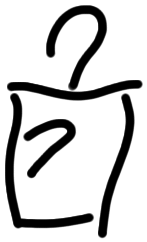
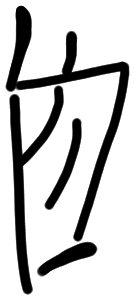
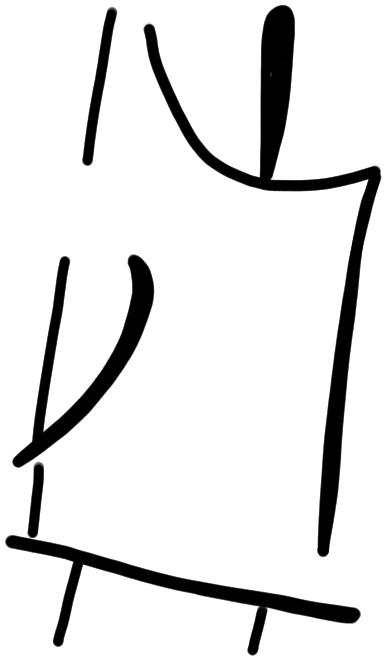
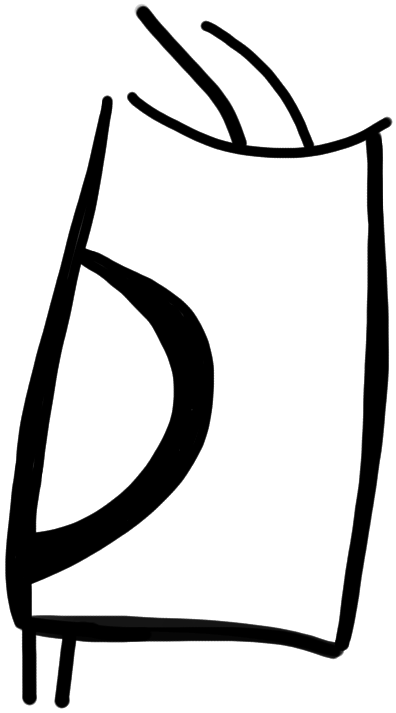
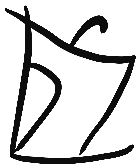

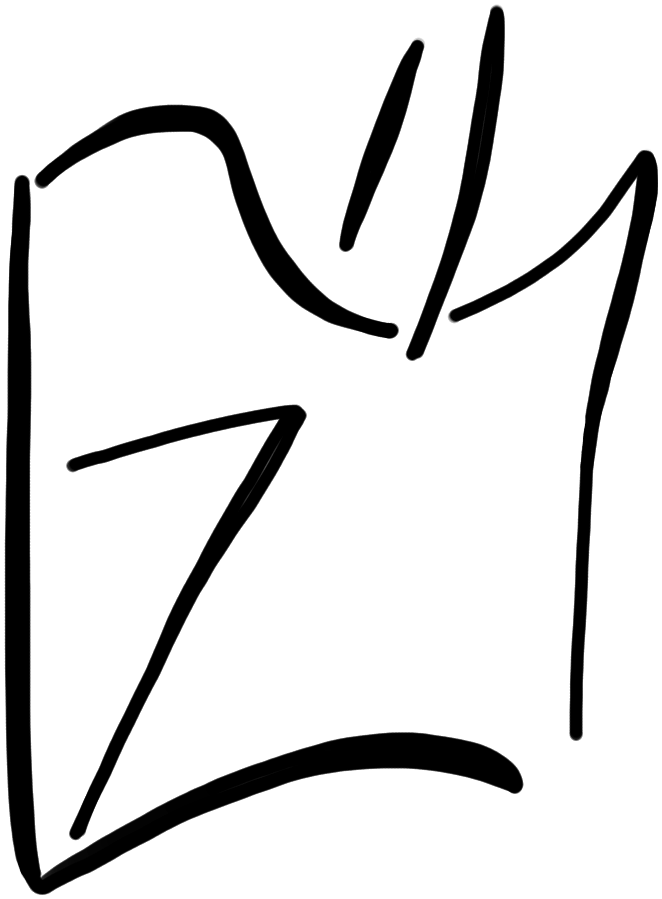
8 of SigLA’s 26 tracings read with certainty, the most-traced site first, shown light on dark. Tracings: SigLA, Salgarella and Castellan, CC BY-NC-SA 4.0
Where it is written
- Khania11
- Haghia Triada8
- Phaistos3
- Knossos2
- Zakros2
- Palaikastro1
- Troullos1
29 times in 28 documents
Read in
- O-SU-QA-REʾō Sōkar ‘O Sokar (Egyptian Skr 𓊃𓎡𓂋𓅆)’Candidate
- O-KA-MI-ZA-SI-I-NAUkammis-Sîn personal name: ‘Sîn has gathered in / laid up (the child)’—verb + DN sentence nameSpeculative
- O-RA₂ʾŌl the Foremost (name element), from ‘priority, supremacy’Speculative
- O-RA₂-DI-NEʾŌl-dīn personal name, ‘the Foremost is judge’ (Ugaritic PN ảwldn)Speculative
6 entries written with it
Commentary
Tomas finds o low but significant at Haghia Triada, RO often ending a word (Tomas 2003, 247, apud Salgarella 2020, 291 n. 6). Palaima and Sikkenga (1999) take Linear A, and by implication Minoan, for a three-vowel system, since Linear B added most o-signs; Davis (2014, 240–42), Melena (2014, 86) and Meissner and Steele (2017) object (Salgarella 2023, 411). O can stand alone, especially on roundels, at Khania only there, and is never part of a composite sign (Salgarella 2020, 156, 232). Davis now takes Minoan for the descendant of a three-vowel proto-language, a, i, u, with e and o secondary, some of them in the last two syllables from [ai] and [au] fused into ‘(usually long) [ē] and [ō]’ when a suffix was added, a hypothesis he calls ‘tentative’ (2026b, 160–61, Hypothesis 19). Proto-Semitic has the same three vowels, and -ay contracts to -ē in A-TA-I-*301-WA-E ʾatainawē, the Palaikastro spelling of -WA-JA, and in A-DE ʾAddē.