*310
proposed
A310 · U+10660
Our readings
- in
- Value
Across the scripts
Linear A
A310
Linear B
no Linear B sign
As the scribes wrote it
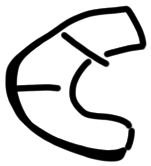
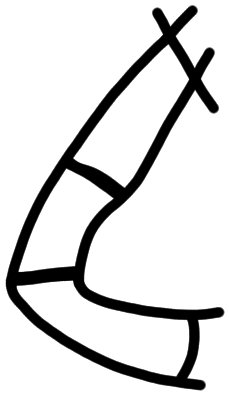

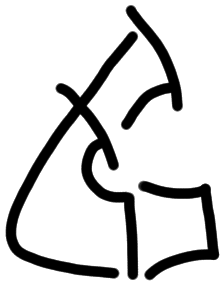
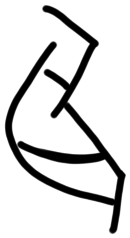
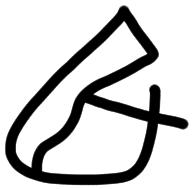


8 of SigLA’s 9 tracings read with certainty, the most-traced site first, shown light on dark. Tracings: SigLA, Salgarella and Castellan, CC BY-NC-SA 4.0
Where it is written
- Haghia Triada7
- Knossos2
- Zakros1
10 times in 10 documents
Read in
- KI-*310-REkinnār ‘lyre (Hebrew kinnōr כִּנּוֹר)’Probable
- QA-*310-Iqaynī ‘smith or cultic administrator’Probable
- PI-*310-Apīnā ‘face, front’Candidate
- KA-RI-*310-IQarīnī ‘Companion’ (personal name)Speculative
4 entries written with it
Why these values
- in
n and t 6/6, every other consonant 5 or fewer, counting the forms in each root’s language cells (headers alone: n 5/6, tied with most consonants); the sixth word, ]SI-ZA-NE-*310 (KN Zf 31), is broken at the front; /ni/ and /in/ give one skeleton
Commentary
VC (vowel-consonant) sign /in/, NOT a standard CV syllabogram. Structural parallel to AU=/aw/: both are VC signs that close syllables rather than open them. IN handles the coda /n/ in closed syllables: QA-IN-I = /qayn-ī/ (where IN provides the syllable-closing /n/ that standard NI cannot). The script has at least two VC signs (AU=/aw/, *310=/in/) alongside its CV core, reflecting adaptation for Semitic closed-syllable morphology. 10 occurrences across Haghia Triada, Knossos, Zakros. KI-IN-RE = kinnare is the anchor reading—the ancient lyre, cognate with Hebrew kinnōr.