*312
proposed
A312 · U+10662
Our readings
- bi
- Value
Across the scripts
Linear A
A312
Linear B
no Linear B sign
As the scribes wrote it
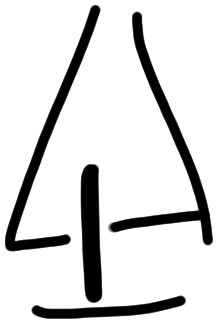
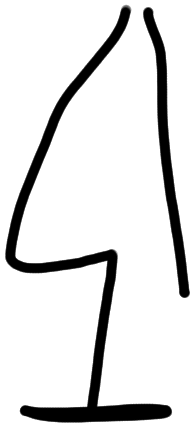
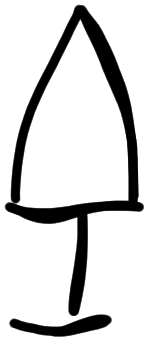
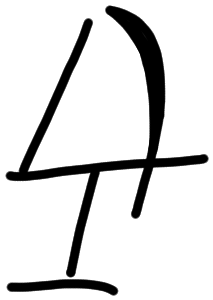
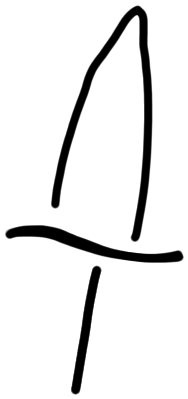
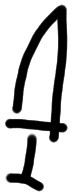
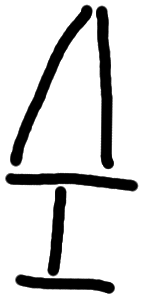
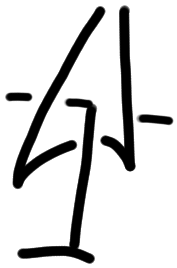
8 of SigLA’s 8 tracings read with certainty, the most-traced site first, shown light on dark. Tracings: SigLA, Salgarella and Castellan, CC BY-NC-SA 4.0
Where it is written
- Haghia Triada5
- Arkhanes1
- Khania1
- Zakros1
8 times in 8 documents
Read in
- *312bitt(u) ‘a length of cloth’Candidate
- TELA+*312(logogram) a kind of cloth: the cloth sign with *312 (BI), short for bitt ‘a length of cloth’Candidate
- *312-TAbīta ‘the house, the household (an institution drawing emmer)’Speculative
- *312-TA₂bīta ‘the house, the household: the Zakros spelling of *312-TA’Speculative
5 entries written with it
Why these values
- bi
its own readings, with no support from another script. Alone and inside the cloth sign it is bitt ‘a length of cloth’ (Ug. bt, DULAT 247–248), which takes the 1¾ of HT 123+124b; *312-TA and *312-TA₂ read bīta ‘the house’, drawing grain beside the estate and the storehouse, and *312-TE-TE bittīt ‘of the cloth lengths’. Against: the rival ZO has the Linear B ligature TELA+ZO and the sign’s shape (Montecchi 2010, 31 n. 38; Melena 2014, 46 n. 50); the lexicon writes bīt with PI, and *333 is also proposed as BI
Commentary
CANDIDATE (0.40). BI, the voiced partner of PI as PA₃ is of PA. The sign alone and inside the cloth sign is bitt, the cut length of cloth, written by its first sign; a length takes the 1¾ of HT 123+124b. In words it reads *312-TA and *312-TA₂ as bīta ‘the house’, an institution drawing grain, and *312-TE-TE as bittīt ‘of the cloth lengths’; On HT 49a, in a list of names, the lone sign is bitt ‘the daughter’; Ugaritic writes house, daughter and cloth length alike as bt. Weak point: the value rests on these readings alone, with no support from another script; the lexicon writes bīt with PI in PI-TA-KA-SE, and *333 is also proposed as BI.
Rival: ZO. The cloth ligature compares with Linear B TELA+ZO, the sign is closest to Linear B zo, and at Khania it stands where ZO does, as one unit in a list with cyperus at ¼ (KH 8, KH 57). On THE Zg 5, ZO 9 is taken for an abbreviated textile name (Michailidou 1992–1993; Boulotis 1998; Burke 2010, 49, apud Nosch and Weilhartner 2026, 131). GORILA keeps A 312 apart from AB 20, and the drawings differ: KH 57's ZO has two open arms meeting at an apex and no foot, *312 a closed head and a footed stem; Melena takes KH 57's sign for a form of A 304. AB 20 stands twice in the corpus (KH 57, THE Zg 5), *312 nine times at four sites. ]MU-*312[ (HT 78) is broken.
As a logogram
length of cloth ‘a length of cloth (bitt), written by its first sign; inside a word BI’ proposed
Nine contexts. Alone before a numeral: HT 49a 1, HT 123+124b 1¾, KH 8 1 among CYP and NI, ARKH 3a 2. In ligature: TELA+*312 (HT 38). In words, a syllabogram: *312-TA 6½ (HT 10b), *312-TA₂ GRA+PA 40 (ZA 6b), *312-TE-TE after *406VAS+KE (HT 26a), ]MU-*312[ (HT 78). One shape in every use, a pointed loop over a bar on a footed stem. As BI it abbreviates bitt ‘a length of cloth’ (Ug. bt, DULAT 247–248): the length alone, cloth in cut lengths inside the cloth sign, and a length takes the 1¾ of HT 123+124b. Rival: ZO, as Montecchi takes it (2010, 31 n. 38), with Linear B TELA+ZO (KN L 433; Del Freo 2020, 58; Killen 2024, 724); see the sign record.